
Sleep
With thanks to Marcus de Guingand, MD, Third Pillar of Health
Sleep is vital to safety, performance and overall health.
If we have had too little sleep, our processing ability, reaction times, responses and decision-making are all adversely affected.
The recommended amount of quality, uninterrupted sleep is seven to nine hours.
However, a 2022 Loughborough University study, fitted trackers to 329 HGV drivers at a Midlands based logistics company. 58% of drivers had less than six hours sleep out of every 24, and 72% had poor sleep efficiency.
Effect on road safety
Sleep deprivation can be acute or chronic, that is, a single night or an ongoing problem. When we need to sleep, our brains do not ask permission – unavoidable brief periods of sleep occur as the drive to sleep increases. The prefrontal cortex (which handles decision-making, communication and emotional regulation), the thalamus (sensory processing), the occipital lobe (visual processing, distance and depth perception) and the inferior parietal cortex (spatial attention and integration of multiple sensory streams) all stop functioning correctly.
In other words, sleepiness makes the brain incapable of just about every function a driver needs and so alertness, attention to the road and its users, decision-making abilities and emotional regulation all start to disappear.
One study (safely) measured the performance of drivers on a track in dual-control vehicles following a night shift compared to a night of sleep. When driving post-shift, 37.5% of drivers experienced a near-collision event within 60 minutes of driving. Those who noticed sleepiness tended to have a near-collision event within 15 minutes of this realisation.
A US AAA Foundation study of actual collision data and driver interviews showed the correlation between driver collision risk and the amount of sleep the driver had had compared to a seven-hour sleep session. Drivers who reported they had slept:
- six to seven hours had 1.3 times the collision rate
- five to six hours had 1.9 times the collision rate
- four to five hours had 4.3 times the collision rate
- less than four hours had 11.5 times the collision rate
The study also found that "drivers who have slept for one or more hours less than their usual amount of sleep in the past 24 hours have significantly elevated crash rates".
Sleepy drivers are dangerous. At its worst, they may experience microsleeps, with drivers involuntarily falling asleep at the wheel. Often these periods of sleep are very short and the driver may not be aware of them. However, a vehicle travelling at 56mph will cover 50 metres during a two-second microsleep – with no driver. The consequences can be devastating. Any signs of sleepiness should never be ignored to avoid this catastrophic state.
Other health issues
Poor or insufficient sleep has profound effects on overall health outcomes, raising the risk of heart disease, diabetes, stroke and dementia. Modern life seems to view sleep as a luxury we can economise on – but it facilitates vital biological processes including clearing the brain of toxins, repairing tissues, consolidating memories and learning, and maintaining the nervous system.
Too little sleep over extended periods compromises our ability to learn, to heal and to make decisions. It adversely affects our mental health and mood, and degrades concentration, motor skills and stamina.
What to do
- All drivers can complete the Epworth Sleepiness Scale. It's a quick questionnaire that highlights behaviours which may indicate unusual sleepiness. This is a useful initial screening tool.
- Educate drivers about the need for sleep and about the dangers of sleep driving. Studies show that drivers are aware of sleepiness but tend to continue driving anyway.
- Make sure drivers prioritise sleep.
- Policies should show that organisations and drivers share the responsibility to make sure all drivers have had sufficient sleep before starting work.
- Consider whether shifts can be designed to reduce tiredness (for example, shortened).
- Collect and analyse data which identifies whether drowsiness may be a problem – and act on it.
- Have a just culture where drivers can volunteer that they have had insufficient sleep to drive.
"I'm up early with the kids, I drive to work, do an 11-hour day, drive home, then I have to pull my weight at home when I get in. So yeah, I burn the candle at both ends. I often only get a few hours' sleep. You do, don't you?"
UK HGV driver
Need a coffee?
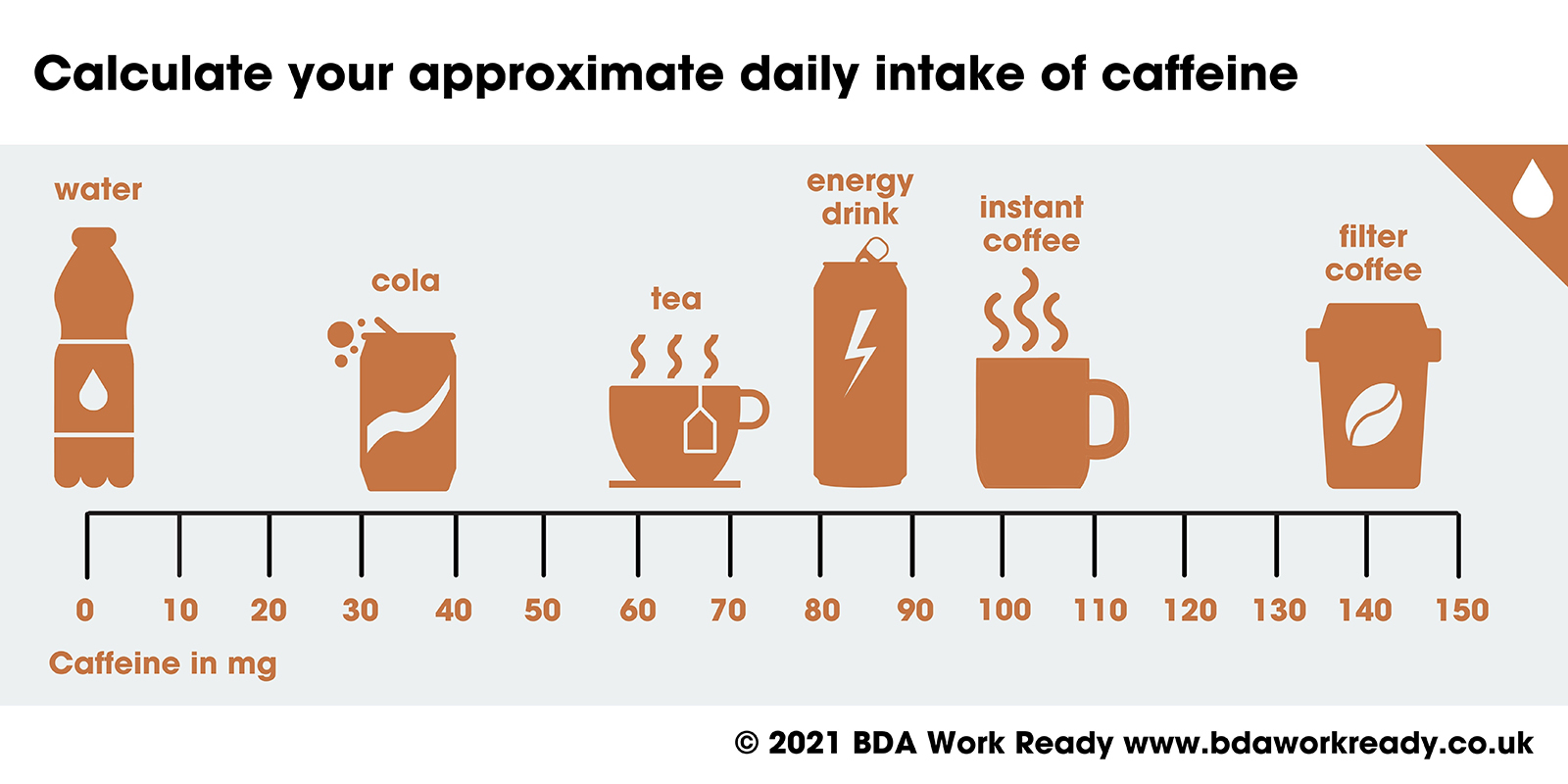
Caffeine is useful and pleasurable to many of us. However, we should not need caffeine to feel alert or stay awake. If drivers are reliant on coffee or caffeinated drinks, this should be seen as a warning sign and be investigated.
If a driver is sleepy, they should pull over safely and sleep or call for relief. The only cure for sleepiness is sleep.
Drinking a coffee may help a little for a short while. Caffeine binds to adenosine receptors which cause sleepiness. It takes around 10 minutes to take effect and peaks in the bloodstream after 45 minutes to one hour.
However, there are two important caveats:
- Just because a chemical delays sleep does not mean the driver is necessarily performing as well or as safely as when rested.
- That caffeine will still be buzzing through their blood stream for the next six to twelve hours, disrupting sleep they badly need.
Sleep warning devices
There are AI-enhanced cameras or other devices which give warnings if a driver's eyes close for more than a second, or their head droops. However, by this time the driver is already asleep, and has probably been driving dangerously for some time. While such devices may be a last-ditch effort to prevent collision, organisations must be far more proactive about ensuring this situation does not occur.