
Physical Activity
With thanks to Annie Holden, Strategic Lead – Health, Active Partnerships
Physical activity is extremely important for drivers. There are many reasons this is true but a few of them are:
- Drivers sit down for long periods – and this has profound and wide-ranging effects on health. Sedentary time is a very strong predictor of all causes of mortality. Sitting for extended periods gives increased risks of heart disease, diabetes and circulatory conditions, as well as musculo-skeletal conditions like back pain. That's true even, if at other points of the day or week, individuals do extensive physical activity. Breaking up the periods of sitting to reset the body is essential as sitting has profound effects on metabolism, sugar regulation and other essential functions. Ideally individuals should not sit for longer than 30 minutes at a time (difficult for most drivers) and to keep total sitting time at less than nine hours, and ideally no more than seven.
- Sufficient physical activity is essential for heart and lung health, reduces the risk of diseases, boosts energy levels and mental health and improves sleep quality.
- Physical activity boosts the metabolism and can help weight loss alongside dietary changes. It can also help maintain weight loss.
- As we age, maintaining muscle mass and strength can also be protective against cognitive decline.
- Physical activity can build a sense of team and camaraderie.
- Drivers engaging in more than one weekly session of physical activity have significantly fewer crashes than less-active drivers (Taylor and Dorn, 2006)
It is tempting for us to focus on the idea of exercise, at the gym or going for a run, which are both excellent if suitable. However, the most important element is simply incorporating physical activity into our daily tasks. Drivers should walk whenever possible – even small amounts of activity are beneficial.
In the UK Chief Medical Officers Activity Guidelines it says: ""If physical activity were a drug, we would refer to it as a miracle cure, due to the great many illnesses it can prevent and help treat."
It recommends that: "Each week adults should do 2.5 hours (150 minutes) of moderate intensity activity (such as brisk walking or cycling); or 75 minutes of vigorous intensity activity (such as running); or even shorter durations of very vigorous intensity activity (such as sprinting or stair climbing); or a combination of moderate, vigorous and very vigorous intensity activity."
Source: Chief Medical Officers' Physical Activity Guidelines
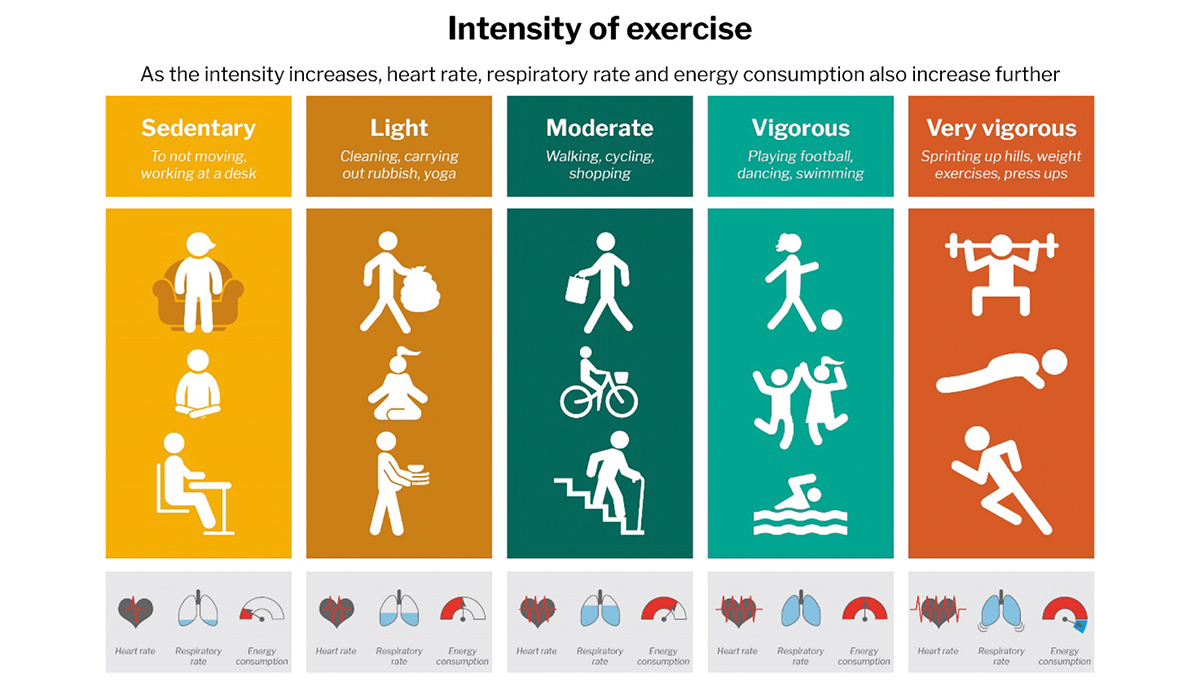
Source: Chief Medical Officers' Physical Activity Guidelines
There are therefore two different challenges for managers of at-work drivers:
- To find quick and effective ways of allowing drivers to move sufficiently to break up extended periods of sitting.
- To ensure that all drivers meet their minimum requirement for physical activity.
Increasing levels of physical activity and fitness brings many benefits to organisations, because it has such a profound effect on other aspects of employee well-being and productivity.
What employers can do:
- Survey driver activity levels.
- Educate drivers about the importance of breaking up sitting periods with movement, and the need for sufficient regular physical activity and cardiovascular exercise.
- Encourage short pre-shift structured activity or exercise sessions for the whole team. This could be as simple as a team walk round the block, or team stretching. This is popular in Asian countries in which rajio taisō – three-minute calisthenics routines – are broadcast daily.
- Fitness trackers can help drivers to monitor and optimise their activity. Step challenges can be conducted so that drivers can remotely participate in team or group-based activities.
- Providing simple fitness equipment with basic instruction in vehicles – such as resistance bands, or light ankle weights.
- Install treadmills or static bikes in depots or offices for use in breaks or during loading times etc.
- Encourage standing meetings or discussions on the move, so that drivers do not need to continue sitting during briefings.
- Do a deal with a local gym for discounted employee rates.
Simple exercises for drivers
Strength
It is very important to build up and maintain strength. There are simple strength exercises on the NHS website, such as calf raises, squats, standing press-ups and leg lifts.
You can also incorporate light leg weights or resistance bands. When working with resistance, guidance suggests no more than 8 to 12 reps.
Cardiovascular or aerobic exercise
Walk as briskly as you can or jog around your vehicle and back the other way.
Try jogging on the spot. Even a minute will make a difference.
If there is a gradient or flight of stairs nearby, climb it two or three times. Only go as fast as is safe.
If stopping for a break, see if you can walk right round the pedestrianised area in your location.
If you have a fitness tracker, set an achievable goal, for example, 500 steps at each stop.
In the vehicle (when parked)
For strength and conditioning, simple in-vehicle exercises, such as clenching muscles groups, holding and relaxing, can help circulation, engage the brain and spinal cord, and alleviate stiffness. Standing plank or a skier's squat against the vehicle or a wall are other examples. Try to work muscles throughout the whole body.
Stretches
Drivers can alleviate stiffness and maintain flexibility by stretching every time they park up.
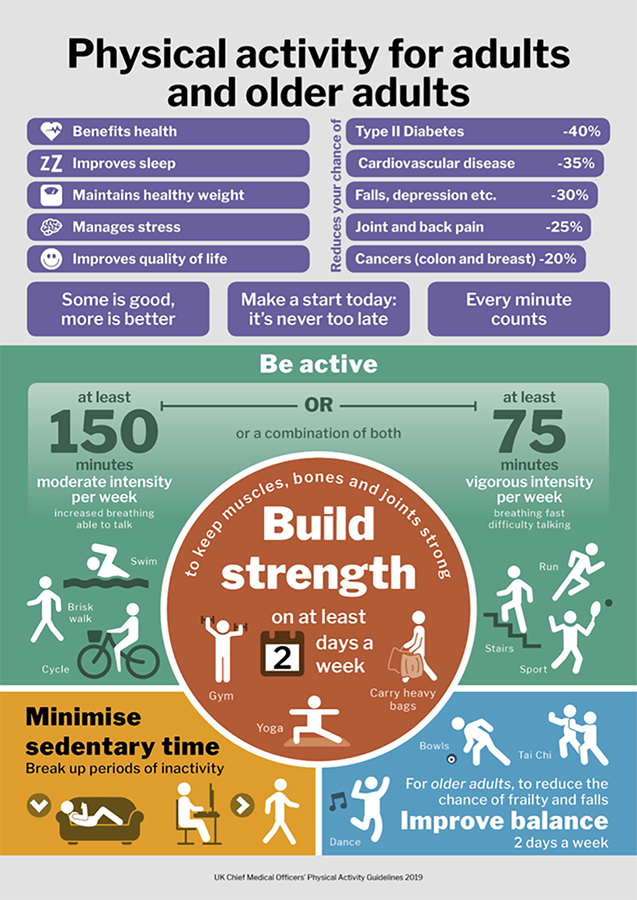
Source: Chief Medical Officers' Physical Activity Guidelines
Resources
Workplace Movement: this is a low-cost membership network, run by Active Partnerships which is in turn funded by Sport England. It helps organisations and communities institute activity and exercise opportunities in the workplace.
NHS Couch to 5K – a free sofa-to-running app created by NHS and BBC.
Guidance on increasing activity from Sports England https://www.sportengland.org/get-moving
NHS exercises: https://www.nhs.uk/live-well/exercise/
Government advice on using the tax system to fund physical activity in the workplace https://www.gov.uk/guidance/fitness-at-work