
Cardiovascular Disease

With thanks to Dr Grant Charlesworth-Jones, medical doctor, barrister and founder of D4Drivers
Cardiovascular disease (CVD) affects the heart and blood vessels can restrict blood flow which can cause heart attacks, strokes and circulatory problems.
CVD is the leading global cause of death which we cannot afford to ignore. In the UK it accounts for 175,000 deaths annually.
CVD is:
- estimated to cause 25% of premature deaths under the age of 75
- twice as common in men than women
- responsible for over 100,000 hospital admissions for heart attacks every year
Research suggests that the risk of CVD in drivers is double that of the general population.
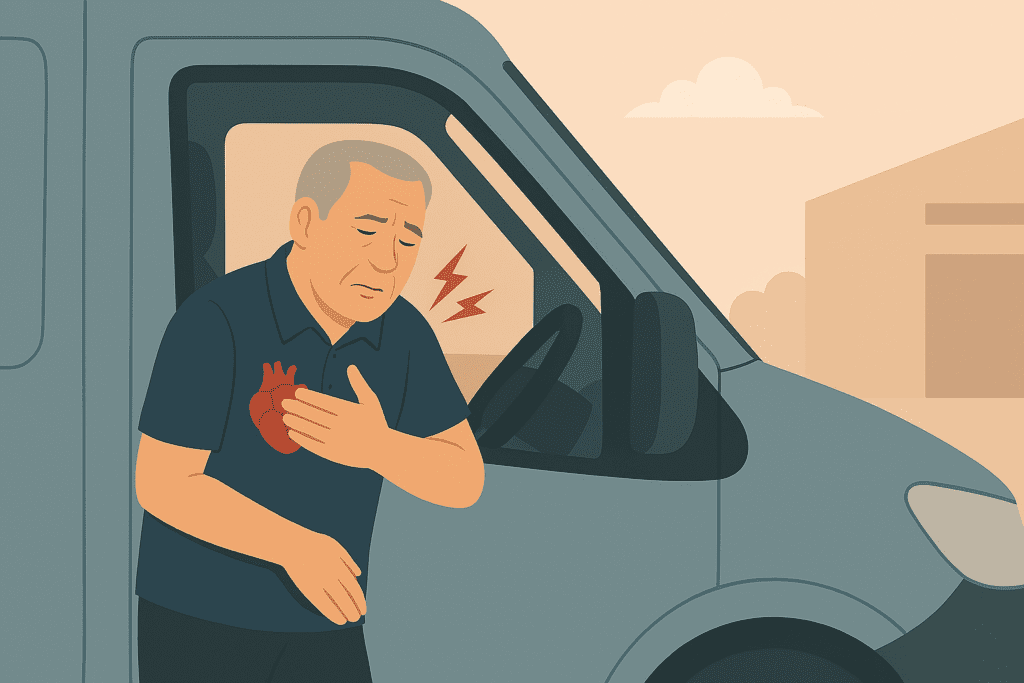
Effect on road safety
CVD can cause breathlessness, chest pain, loss of consciousness or dizziness, all of which seriously undermine a driver’s ability to safely control the vehicle.
Hence drivers with an increased risk of CVD can also have:
- an increased risk of collision
- an Increased risk of sustaining a serious or fatal injury.
- excessive healthcare costs
Vocational and full-time drivers should therefore be treated as a priority for heart health.
What employers can do
- Introduce and insist upon a preventative healthcare programme. (See Chapter 2 on psychological safety and graded assertiveness/PACE.)
- Treat all workers as if they are at risk of CVD – that’s what the data on vocational drivers tells us. We also know that drivers with related conditions such as obesity are an increased collision risk so tackling driver health can very much pay dividends by reducing direct and indirect insurance losses.
- Do not rely on blood pressure standards for the DVLA Group 2 medical test. The fail point for vocational drivers is 180/100 – but NICE guidelines say that 140/90 (a much lower blood pressure figure) is cause for concern.
- Drivers often have little time and less inclination to seek medical advice. Make the time and the opportunity for them. Proactive healthcare for key diseases like CVD will make your workforce safer, protect your employees and boost productivity.
- Make regular blood pressure checks available to drivers. These cost very little and can even be self-administered with automated blood pressure monitors which cost as little as £40 from any pharmacy. Many organisations now have defibrillators on site, which is excellent. However, a blood pressure monitor in the office may save more lives in the long run.
- Introduce exercise, healthy food and sufficient sleep as key principles of your working culture.