
Driving for Work: Mythbusters
52 common misconceptions – and the facts employers and drivers need to know
Myth 21: My manager won’t be interested if I say I’ve had no sleep and I’m too tired to drive
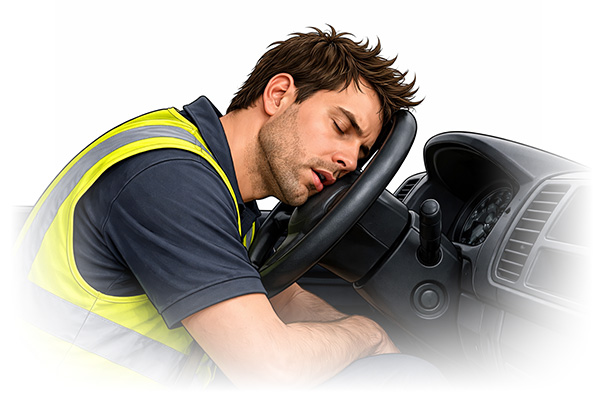
Up to one in five collisions are caused by tiredness and usually involve vehicles running off the road or into the back of another vehicle. They tend to be high-speed impact collisions with an increased likelihood of death or serious injury. Driving while tired or unwell impairs judgment and slows reaction times, leading to delayed responses and late braking.
Sleeping just four to five hours a night for a week impairs performance to the same extent as being over the alcohol limit. Tired drivers can also have what are known as microsleeps, which last from a fraction of a second to two seconds. At 60mph a vehicle travels 27m/sec, so microsleeping for two seconds means 54m of unconscious travel.
Employers must take all reasonable steps to ensure that anyone driving on business is alert and fit for the entire journey. If a driver genuinely believes their manager would rather they drive while fatigued than report unfit, that is a serious indicator of a broken safety culture.
Employers must make it unambiguously clear that drivers who report themselves unfit to drive will be supported, not penalised. Drivers who fear the consequences of speaking up are the ones most likely to drive when they should not – with potentially fatal results.
Driver takeaway:
If you are too tired to drive safely, say so.
Your manager has a legal duty to support you, and if you genuinely believe they wouldn’t, that is important information about your organisation’s safety culture that should be escalated.
Manager takeaway:
Make it unambiguously clear in policy, in briefings, and in daily behaviour, that a driver who reports themselves unfit to drive will be supported, not penalised.
Any manager who creates the opposite impression is creating a serious risk for the organisation.