Changing the Odds: Improving Safety for Young and Novice Drivers
Driver Safety Theatre: Session 4
28th April 2026, 14:00
Transcript
Right, good afternoon everybody. Thank you for coming to this session.
It’s a bit of a niche topic for a driver safety theatre. It’s not one we’ve done before. It’s about managing young and novice drivers.
Before we start, could I have a show of hands? Who works for a company that operates any number of company vans?
All of you, can you keep your hand up if you suspect that any one of your members of staff might have been driving a van for the first time working for your company? Quite a few of you.
What I’m hoping is that after this session you’ll have a completely different perspective on how you induct those drivers and provide training for them.
What I’m going to cover today is the risks, what the research shows about young and novice drivers, how to create a good framework for managing the risks, what good practice looks like and the key things that form good practice. I’ve got a couple of case studies from companies that manage this well and use the same framework. Then we’re going to look at some of the priorities you should be focusing on as you go away from here to make sure you are covering those. I’ve also got a bit on objection handling because what I’m going to suggest you do will require some time and investment to do properly, so we’ll cover a bit of objection handling from colleagues at the end.
Definitions: quite often we think of a young driver as just a 17-year-old learning to pass their driving test. When they pass the test, maybe 18 or 19, perhaps for a year or two after that. But the definition of a young driver is 17 to 24. That means all of your apprentices are classed as young drivers. Very few of them will have ever driven a van before.
Your graduates as well might have passed their test at sixth form, gone to university, not driven for four years, and then come out.
Novice drivers are people who are new to that particular vehicle type. So it could be someone who has come from a car to a van, or from a smaller van to a larger van. Generally more mature, but maturity does not equal experience, especially in that vehicle type.
Another thing to think about is that even if someone is middle-aged, they might have passed their test quite late. I’ve seen lots of companies deal with staff who have spent a lot of their life in a city, relying on public transport the whole time they were there. Then they move out of the city, take a driving test, and get a job as a sales force member, delivery driver, or service engineer. So someone who could be 40 could actually have far less experience than one of your young drivers.
So there are some really challenging issues to deal with here.
The scale of the problem is pretty massive. 20% of all deaths and serious injuries, KSIs, killed or seriously injured in road collision terms, 20% of those, one in five, involve a driver aged between 17 and 24 at the time. Young male drivers are four times more likely to be killed or seriously injured when driving.
There are a number of reasons for that.
To bring this home, this is a very recent case that has been in the news over the last four weeks and is currently doing the rounds on social media.
The incident itself was a year ago. A company asked one of their 27-year-old employees, I think based in Southampton, to go to central London, pick up an electric Transit van, and drive it back. He had never driven any kind of electric vehicle before and had no training in that type of vehicle.
When he got in it, he mistook the brake for the accelerator. That might sound like a silly thing to do, but pedal confusion is a real thing. If you sit in your car every day, the pedals are in a certain place. If he got into that van and the pedals were slightly offset to the left, his natural instinct is to put his foot in a particular place, which in this instance was the accelerator.
Because it was an electric van, he was not used to the instant torque and instant acceleration. He careered through metal gates, seriously injuring two people before mounting a flower bed where the van took off and struck a bench, where a young student at London College was sitting. She died at the scene.
The driver was then legally advised to plead guilty, and the judge gave him eight years. While it is an absolute tragedy and a loss of life, there are also three young children growing up without a father.
What people in the work-related road safety and general road safety world cannot understand is why the legal process did not involve his employer for not providing training in that vehicle.
What I would suggest is that anyone inducting people into vans or EVs, young drivers or novice drivers, should ask whether they could realistically demonstrate that they have done everything needed to induct that person properly and provide a proper training regime so they are confident and competent in that new vehicle.
There are three key risk factors for young drivers.
The first is limited driving experience. The DVSA tells us that the average experience when a driver passes a test is 45 hours of paid lessons. That is a lot of money. Around 22 hours of private driving is added to that.
That will vary widely because not everyone can afford 45 hours of lessons, which are normally around £40 an hour. There is no minimum level of on-road experience required to get a licence. So you could have two young drivers with the same qualification, but one might have 100 hours of experience in all kinds of weather and road scenarios, while another may have had a week of intensive training, scraped through in a sunny week in September, and not driven in bad weather or on motorways.
The second is neurological development. Anyone with older teenage children will know there are issues around development and risk perception. Brains do not fully develop until around 25, sometimes later. This affects emotional regulation, decision-making, and risk perception, and how they respond after perceiving risk.
It also affects circadian rhythms. Younger people tend to go to sleep later and wake up later. Putting those drivers into early shift patterns can exacerbate fatigue-related issues and bring fatigue on more quickly.
The third is behavioural risk patterns. They are more glued to their phones at a younger age. That can be a real thing.
Risk-taking in this is a really interesting point because of the age they’re at and the lack of full brain development. What they can very easily do is increase their confidence at a faster rate than they increase their competence. That can then lead them to taking risks they otherwise would not do.
Van-specific challenges are quite often that transition from car to van is harder than many drivers anticipate, and it is probably more difficult than many employers realise as well.
If you think about what van drivers have to deal with, visibility is the first thing. There is no rear view mirror, there are bigger blind spots, and a very different driving position to what they are used to. You’ve got restricted manoeuvrability, a bigger turning circle, especially in a depot.
Vehicle dynamics are completely different to a car, and they handle differently when laden and unladen. The centre of gravity is something that comes up a lot in multi-drop and last mile delivery because drivers start with a full load of packages and as that load reduces throughout the day the centre of gravity can shift quite markedly, increasing the chance of a rollover. That is more common than you would think, but most drivers would not realise that.
Crosswinds and speed perception are also important. From the elevated position of a van, novice drivers can have a completely different perception of speed. In a low sports car you know you are going fast because everything is rushing past you close to the road. In a van you are sat higher up with softer suspension and a different view, which can make you think you are going slower than you actually are.
Operational rules are another issue. How confident are you that all your van drivers understand that some roads have different speed limits for panel vans than for the car they got out of in the morning?
The final point here is technology gaps. Most cars now have a lot of ADAS technology, advanced driver assistance systems, including emergency braking. Vans are a long way behind, although they are starting to catch up. Euro NCAP ratings are pushing manufacturers to include more of this. What you can find is a driver coming to work in a very safe car and then spending the rest of the day in a much heavier, larger, more ungainly vehicle with far fewer safety nets. Technology they rely on in their car may not exist in the van, but they may assume it does.
I mentioned confidence and competence earlier. We all know confidence increases over time as someone spends more time in a vehicle. Competence, meaning the resilient ingrained reaction when something unexpected happens and you instinctively do the right thing, comes later.
With a young or novice driver, competence comes some time behind confidence. That creates a danger zone where confidence is ahead of ability. That is the bit you really need to manage.
In that period, optimism bias comes into play. Drivers overestimate their ability to deal with situations. They may forget some of the things they need to do in the van and revert to habits from their usual car.
Research shows safety can actually get worse in that period despite being in training, because as confidence rises disproportionately to competence they start to take more risks. They start driving faster, following closer to other vehicles, and then when a situation arises they are not in the right frame of mind or position to deal with it.
The framework you need has three tiers, which stack on top of each other.
The basic level is a comprehensive vehicle induction so they understand everything about the van and its systems, an initial driver assessment and profiling so you understand experience and confidence levels, going through the driving for work policy, and basic telematics and monitoring in the vehicle.
This is why I mentioned objection handling, because I appreciate telematics requires investment, but the return should be strong. This is the floor, the minimum level.
For good practice, you need enhanced controls. A permit to drive assessment where they go through a proper DVSA-style pass-fail process. If they do not pass, they do not get a permit to drive.
You should have a buddy or mentoring system so drivers have a role model to help them adopt good behaviours. A distributed training programme is also important. Because of limited brain development in early twenties, a two-day intensive induction does not stick.
Companies that manage this well use distributed training, so instead of two full days and then handing over the keys, it is half a day per week for four to six weeks. I will explain why that works in a moment.
For young drivers specifically, you extend this further. Mentorship may run for six months and may include no solo driving during that period. Some companies do this, and while it sounds intensive it can significantly reduce incidents.
You also include additional classroom and e-learning within the permit to drive process and targeted campaigns throughout employment, especially over the first six months, to reinforce policy.
The permit to drive typically starts with a desktop risk assessment, where drivers answer questions about attitude to risk and hazard perception. There may be safe driver induction workshops covering mobile phone use, impairment, fatigue, and similar risks.
A minimum level of in-cab training is required before they receive a permit to demonstrate competence in the vehicle. There may be a DVSA-linked pass-fail test, eyesight testing as an entry requirement, and minimum driving experience requirements.
You may also restrict access based on penalty points or convictions. Drink or drug driving or mobile phone convictions are major red flags for attitude to risk. In some case studies, drivers with those histories are not considered at all.
If behaviour or accident history becomes a concern, the permit can be revoked. Drivers are either supported back to an acceptable standard or reassigned to a non-driving role.
Risk profiling is usually low, medium, or high. Criteria can vary, but the aim is to determine the level and intensity of support required.
Vehicle induction is critical. Drivers need to be confident in a larger vehicle with different characteristics. This usually involves in-vehicle testing, checks, and understanding of vehicle technology and safety systems.
Then there is distributed training. Companies that had high collision rates among young drivers often saw reductions when they moved from two-day intensive training to a four-to-six-week programme. This helps information move from working memory into long-term memory.
It also supports latent learning, where over time and overnight the subconscious absorbs what has been taught. Combined with real-world driving and mentoring, this drip-feed approach reinforces messages more effectively.
Mentoring is also critical but must be done properly. Mentors need patience, teaching ability, and the willingness to challenge poor behaviour in a sensitive and effective way.
If mentoring is not done well, for example if a mentor treats telematics as something to be gamed rather than used to improve behaviour, it becomes a masterclass in the very behaviour you are trying to prevent.
We would recommend mentoring for anywhere between six weeks and six months.
The mentoring thing can work really well because you can make this part of the professional development of some of your more experienced drivers. They might not have or see any career progression with your business once they get to a certain level, but to then involve them in the mentoring program and reward them for that as a job done well, provide them the time to do it properly, that can really elevate standards within the whole of the business.
Active monitoring. I was talking about telematics. I would suggest you really need to look at telematics because if you cannot use the data that comes out of it, it makes improving those drivers very difficult. What a lot of companies with telematics do is they will get a league table of all their driver scores throughout the whole business. It allows them to focus on the ones who need the most help. But when you are then having discussions with younger and novice drivers about their performance, you have real world data to go on to inform those discussions, and it is not just you coming across as trying to talk to them about bad behaviour which they may feel was subjective. You have concrete data to base those discussions on. If we make an effort, as we would in any training, to label the behaviour rather than the person, the telematics data really supports that.
Building a safety culture is something you are all familiar with. Culture is the established way things are done around here. So if your new drivers come in and they see everyone else corner cutting or speeding, that is the behaviour they are going to adopt. So they need to come into a culture where it is expected that all your drivers behave in a certain way and are familiar with your driving for work policies.
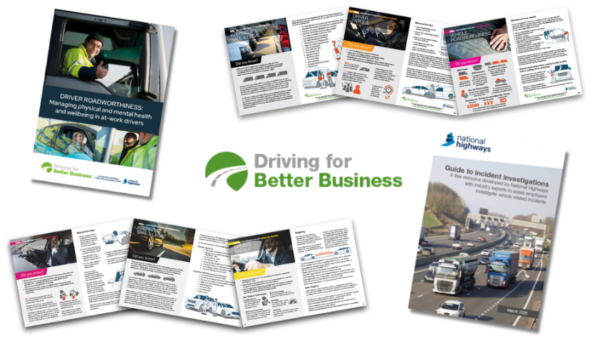
We need to emphasise learning from incidents. One of the resources we have at Driving for Better Business is an incident investigation guide. If you go through that, it is very tempting to just blame the driver for everything, but there could be systemic issues within that. It could be work schedules, managers phoning up drivers with additions to work schedules, or shift patterns that are wrong. You need to learn from those incidents and communicate that well with all drivers to ensure those learnings are made. When improvements are made, recognise that publicly. We cannot have everyone at the top of the league table. So if one of your drivers near the bottom makes improvements and gets solidly into the mid table, that is something to be celebrated and recognised so they will at the very least stay there, if not continue to improve.
So a couple of quick case studies. Electricity Northwest is a company we have been working with for a number of years. Their young drivers were having between them three collisions every month. They were having an intensive induction at the start, and that was then separated out into four half day sessions across a month. They got expert presentations in to talk about various driver risks, specifically distraction from mobile phones, which was a major challenge they had to contend with. They also got testimonials from the parents of young driver victims who had been involved in crashes. Some people like that and some people do not, but the feedback from drivers was that it gave them something to think about. Drivers reported that they were thinking about this when driving into work because of what the parents had said. They also explained some of the scientific reasons that I went through with them initially.
This case study was written 11 months after they started the program, and in those 11 months they did not have a single collision involving one of those young drivers. That is 33 collisions involving young drivers they did not have.
The other one is Northern Power Grid, which is a much bigger and more complex business. They already had a very well established young driver and novice driver induction program, but they were still having a higher collision rate compared to their other drivers. They brought in a new training program, which was two full days at the start and an additional four half days, spread over six weeks. They paired their drivers with qualified mentors throughout this. This is where extending mentoring to six weeks or six months comes in. These are companies that have done it and it works for them, and they are seeing business benefits.
They extended mentoring to six months for young drivers. They also have a minimum requirement to get into their permit to drive system. You must have held a licence for a minimum of two years. If you have seven points or more, you do not qualify. You must have six or fewer points. If you have had a drink, drug or mobile phone offence within the last four years, you do not get onto the permit to drive system. They offer additional courses within that as well. They implemented part of that system across the board for all drivers and the enhanced level for young drivers. They have seen improved telematics scores across the business. Their telematics scores are in the mid 90s and they increased them by about another 5 percent, from about 95 to 98, along with much lower collision frequencies.
So five priority actions I would like you to take away. I will share the slides so you do not need to take photos. First, see if you can implement a permit to drive system. Lots of big companies do this already. They do it for a reason. It reduces risk because it allows you to have a proper framework for understanding driver risk and preventing those who are too high risk from putting themselves and others at risk.
Second, provide a comprehensive vehicle induction. Make sure they understand everything on the vehicle, how to do a proper walkaround check, and what all the safety technology does.
Third, use distributed training because it works. Half a day a week for four to six weeks improves information retention and improves driver behaviour.
Fourth, monitor and coach actively and use telematics data in those conversations.
Fifth, establish a buddy system or mentoring system. Select mentors carefully and run it for a minimum of six weeks, but longer for younger drivers is really worth doing.
I mentioned looking at telematics. We do not have time for extended training, but do you have time not to look at it? The costs of management time, dealing with incidents, and insurance claims take far more time than doing extended training. If you spread training out rather than doing it all at once, you are not increasing disruption, just distributing it, and the benefits work.
Experienced drivers resist being treated like novices. Reframe that as professional development or vehicle certification so it is not framed as driver training, which people do not like.
If you cannot afford comprehensive monitoring, a basic telematics system costs about £30 per vehicle per month, about £360 a year. One modern wing mirror on a van with electric controls and indicators could cost over £1,000. One saved wing mirror could pay for three years of telematics. Good mentors are often seen as too busy, but this can be a way of rewarding good drivers and showing how much you value them.
Key takeaways: transitioning from a car to a van affects all drivers regardless of age or experience. Competence in one vehicle type does not mean competence in another. Young drivers face all of those challenges plus the neurodevelopment lag, meaning they are not as developed in risk awareness.
The confidence competence gap creates a danger window that needs to be managed. A tiered approach with permit to drive, distributed training, mentoring, and a safety culture works. That is why companies do it.
The presentation is based on a new resource we are launching, a 40 page PDF guide on how to identify risks and create a framework that works for your business. You can access it through the Driving for Better Business resources at drivingforbetterbusiness.com/support. If you have specific queries, you can email us at support@drivingforbetterbusiness.com. Feel free to connect on LinkedIn as well.
That is the end of the presentation. Does anybody have any questions?
What about the scenarios that I am experiencing today of being given a hire car where there was no real handover and I specifically requested no EV but I still have an automatic. I am used to driving a manual and you say about the pedal confusion might possibly have happened once today which luckily had no consequences but it did scare me. But there is just no handover.
Is there merit in exploring that sort of scenario do you think?
Yes there is, and I am aware of those kind of issues with a lot of other companies as well. What some companies do is they put in a rigid framework with the hire car company which they are supposed to follow. I appreciate that does not happen all the time, and one company I know did that still got cars delivered regularly with flat tyres and warning lights and that kind of thing.
All you can really do is try and manage it to the level that you are able to with the time available. If you make it known and you cause a stink with the hire car company when things do not go right, they are more likely to try and give you one of their better cars than someone who maybe does not complain. That does not get rid of the problem, it just pushes it to someone else unfortunately.
I heard a story from someone I was talking to yesterday who said he always complained about the car because it kept being delivered from a well known hire company with faults. It got to the point that when they deliver him a car now, they wait until they know he is not there, shove the keys through the letter box and run away so they do not have to do the handover.
It is a really good point. I do not know how you deal with it other than trying to set an agreement level with the hire company that they will do this. But I am aware of many stories where that still does not work. So you just have to manage it as best as you can.