What Went Wrong? Using Incident Investigation to Reduce Risk
Driver Safety Theatre: Session
30th April 2026, 10:45
Transcript
ST: Good morning, everybody and welcome to the final day in our Driver Safety Theatre. Thank you for all sparing some time to come here for an early session on day three.
Our session today is entitled ‘What Went Wrong?’ and it’s all about incident investigation after a road traffic incident involving one of your drivers, how you conduct that incident investigation, what you can learn from it, and how to share those learnings.
So, my colleague here, Mark Cartwright, who’s the Head of the Commercial Vehicle Incident Prevention team at National Highways, is going to do a short presentation to set the context, and then he’ll be joined by Stefan Szrama, who’s Head of QHSE at Mitie, and Renee Rogers, Founder of ONO to do a discussion afterwards.
So, Mark, over to you.
MC: Thank you very much. Fantastic. Welcome everybody. Okay. What went wrong? Incident investigation.
Why does it matter? The reason it matters is a third of all road deaths involve somebody who was driving for work. It was instigated by somebody driving for work that took somebody else out. It was people who were driving at work that managed to take themselves and colleagues out.
A third of all road deaths.
Anybody know any people typically die on our roads in the UK every single day? Can you take a guess?
Come on, Tim. I know you know.
It’s about five. Five people will die.
And I know we love coming to these events because it’s full of health and safety professionals. Could you imagine the uproar if five people died on building sites every day? Five people died in warehouses every day. But somehow, we become blind to the fact that five people die on our roads and a third of those are directly involved with at work drivers. Over 25 million people drive at some stage during the year for work purposes. It might be your professional drivers, your truck drivers, your van drivers.
But it also includes those people driving company cars for your organisation. It includes those people who driving grey fleet. So, how many of your businesses operate trucks?
Yeah, got a couple. Vans? Yeah, a few more of them. Company cars, the traditional stuff? Yeah. Grey fleet?
Grey fleet really is what I’m almost expecting everybody’s hands to go up because that’s the director going to a meeting. It’s anybody using their own vehicle. And actually, the risk increases as you come down the vehicle size.
Vans are more dangerous than trucks. Typically, cars are typically more dangerous than vans. So what I would like you to take away from today is a few things.
The first thing I’d like you to take away as health and safety professionals is that occupational road risk is probably one of your significant risks. I would put money on that. Work-related occupational road risk kills more people in the UK than any other type of activity that goes on within a workplace.
And the punchline of all this is most of this is preventable and most of the learning comes from understanding what’s behind minor incidents and near misses. I think near misses is the wrong phrase. They’re not near misses are they? They’re near hits.
But anyway, near misses. The learnings are there. They’re free lessons and getting in early before it turns into something catastrophic is what it’s all about. You’ll all be aware of the risk pyramid. You start at the bottom with loads of near misses, loads of minors.
You move up to serious kind of damage-only stuff. You move up to serious, you move up to fatals. We’ve already established about five people die on our roads every day. It’s about 60 or 70 will suffer serious stroke life-changing injuries.
So hopefully we’re giving you a bit of an idea of the scale. So before we start handing over to the guys, let’s just put it out there.
We think a good investigation isn’t something that’s a hunt for somebody to blame. That isn’t to say that it won’t be there won’t be some blame at the end of it. This isn’t necessarily a blameless process, but we don’t go in there looking for somebody to blame. It’s not a disguise disciplinary process. It’s not a box to tick so you keep your insurers happy.
It’s not something you only do after a fatal incident at the other end of the pyramid. And it’s not typically a single person’s job in an organisation. You’ll be calling in colleagues from your HR team, your legal team, your health and safety team.
So now we know what it isn’t. How about we explore what it is? It’s a structured search for the truth. It’s a way to understand systemic failures. It’s the best tool you have. They’re free lessons. They’re relevant for near misses and major incidents. We’ve already met minor incidents. And importantly, as with every health and safety element that goes on within your organisation, it is absolutely a shared responsibility.
So, one of the things that we’ve got built into the guide that we got behind the scenes to support this, and I have to give credit to Stefan because we basically stole his idea for this, is an absolutely brilliant flowchart.
Start here in the top left hand corner and it will guide you through the process.
It will guide you through the decisions to identify the level of responsibility and what remedial actions should be taken. And it’ll become clear as we go through the presentation. that you always go into an investigation starting with the intent to understand were the actions that led to the incident deliberate? Were the consequences as intended?
Does this separate malice away from just mistakes or from system failure? Follow the evidence. Make sure you got the right policies. Capture data quickly.
Find the system. What system was the driver doing? Why would they follow? Why did they do what they did? And very, very importantly, decide proportionally what the outcome is, what remedies need to be applied.
So, this the flowchart, you won’t be able to read it from there but basically you start here and you’ll guide through it. Now first question: were the actions intended? Yes or no?
Were the results as intended? So you get the kind of drift. It’s all binary – yes or no – and it’ll steer you in the right direction.
So, our first case study: we had an HGV driver making a left turn. As he went around the turn, he clipped a concrete bollard with his trailer and ignored the blind spot sensor alert that activated. Dashcam footage, captured by a passing motorist and sent to the organisation, showed very clearly that the driver was distracted by his mobile phone. He was actually changing a Spotify playlist.
He then lied to the organisation, claiming there hadn’t been any damage to his vehicle. The manager’s account was that the vehicle had been hit while parked. We get a lot of those, don’t we? Anyway, the subsequent investigation confirmed that he had been using his phone. He had violated strict company policies and had recently received training on safe urban driving and hazard awareness. Despite that, he knowingly disregarded safety protocols to interact with his phone’s playlist while the vehicle was in motion.
So, the highlights from that flowchart. Were the actions intended? Yes. He didn’t accidentally pick his phone up to change the playlist. Were the outcomes as intended? No. He didn’t mean to crash. Were procedures knowingly violated? Yes, they were. Were procedures clear and workable? Yes, they were.
What does that give us as an outcome? It tells us this was reckless or careless behaviour. Let’s look back at the driver’s record. Is there a history of similar behaviour? In this case, no, there wasn’t. There had been one minor low-speed manoeuvring incident in the last couple of years.
You take your way through that flowchart. There we go: actions intended, yes; results intended, no; procedures knowingly violated, yes; procedures clear and workable, yes. Reckless behaviour.
Then you get to decision time. What was his behaviour like in this particular instance? The decision, at the end of the day, was to issue a first written warning. The driver has hopefully learned his lesson, the message will get across, and away we go.
Make sense so far? You like that, Stefan? He nodded.
Good. Now let’s look at our second case study.
We have a carpenter in a van working for a housing association. It’s a frosty morning. He loads his van and sets off. Halfway there, he turns right at a roundabout, loses control, swerves left, hits a tree, injures himself, and badly damages the vehicle. The vehicle is a write-off.
When the police arrive at the scene, they discover very quickly that the van has a severely underinflated left rear tyre. The van is also heavily overloaded, with lots of unsecured materials, leftover fuel, and tiles from a previous job.
Let’s go through the same process. Were the actions intended? Of course they weren’t. Steve didn’t intend to crash. Were the outcomes as intended? No. Were procedures knowingly violated?
Steve didn’t know there were any policies. He’d never seen a policy. He’d never had any induction relating to his vehicle.
Would another person have done the same in the same circumstances? Probably yes, to be honest, because there were no policies and no guidance.
You come down through that flowchart classification, and this was actually system-induced behaviour. The housing association created the conditions for this collision. Steve was fundamentally set up to fail through a lack of training, a lack of induction, and no access to policies. He wasn’t aware of the organisation’s expectations.
Was he trained correctly? Was he competent? The answer is no, and that points back to the systems within the organisation. The outcome in this particular case was no formal action against the driver. However, the action for the business was to put the right processes in place, establish policies, communicate those policies, and make sure drivers were properly inducted.
There’s a recent case we’ve written about on LinkedIn. If you have a look at our LinkedIn profiles, you might have seen it. A van driver, a father of three, was sent to prison for eight years.
He was asked by his employer to take an electric van from London to Southampton for bodywork repairs. He’d never driven any type of electric vehicle before. Within ten minutes of getting behind the wheel, he experienced pedal confusion, seriously injured two people, and killed a student who was sitting on a bench.
He’s been sent to prison. I don’t know whether that’s right or wrong; the court has made its decision. Let’s assume the legal system has worked correctly. There has been absolutely no investigation into the company or action taken against the company that fundamentally handed somebody the keys to what was effectively a high-performance vehicle, patted them on the head, and wished them the best of luck.
You’re health and safety professionals. You wouldn’t do that in a factory. You wouldn’t let somebody loose on a piece of machinery. You wouldn’t let somebody loose with a forklift truck in a warehouse. Yet somehow it seems to be acceptable on the public road. It’s not right, is it?
So that’s what we found out with Steve. We found the immediate causes and the root causes.
To summarise, our truck driver in the first case was a distracted driver. He received a final written warning because the system was working, the policy was clear, the training was sound, and the management processes were in place. The driver made deliberate choices that put lives at risk. The investigation confirmed individual accountability.
Remember what I said at the beginning. I’ve attended a lot of events where people talk about having a blame-free culture. This isn’t about having a blame-free culture. It’s about having a fair and just culture, which may well identify blame at the end of the process, but only after it has been dealt with fairly.
The bottom line is that good systems don’t guarantee good behaviour, but they do give you the basis to act when things go wrong.
Our carpenter in the van was a rudderless driver because the system failed. There was no policy, no training, no vehicle management, and no ownership of fleet safety. It turned out that every vehicle in the fleet was having at least one minor collision every year, but no one was asking why.
There were plenty of warning signs. It shouldn’t have happened, should it?
So, what does a good investigation process look like?
Investigate everything: near misses, near hits, damage-only incidents, and minor injuries. They’re all free lessons. The risk pyramid is real. If you don’t deal with issues at the bottom, you’ll eventually end up at the top of the pyramid.
Start with the questions, not the answers. We love the Five Whys. Why did you do that? Why did you do that? Why did you do that? Keep digging.
Look beyond the driver. Yes, there may have been individual errors, but was there something systemic happening behind the scenes?
Act on the findings. This isn’t just a paperwork exercise. Do something about it. Build a culture where people report incidents.
We talk a lot about creating a psychologically safe environment where people feel able to say, “I’m too tired to drive today,” or, “You might want to have a chat with Kevin. Something’s going on. He’s not being himself.” That will save lives.
Review and learn. Look across all of your incidents. Is there a pattern? Are people rushing on Fridays and crashing more often on Fridays? I don’t know, but that’s the sort of question you should be asking.
So, that’s the Five Whys covered. Before I hand over to Stefan and Renee, can I ask you to write this number down somewhere: 0300 123 5000. Or take a photograph – that’s a very good idea.
Does anybody know what that number is?
That’s our control room at National Highways. So, if you’re out on the road, or your drivers are out on the road, and they see something that isn’t life-threatening – otherwise, call 999 – such as debris or a stranded vehicle, ring that number. Tell us what you’ve seen, tell us where you are, and we’ll get it sorted before that risk turns into something worse. We’ll put the warning signs on, send traffic officers out, and deal with it.
Lovely. Thanks, everyone. Over to you. Have we got any questions for our esteemed colleagues?
Right, we’ve finished early, so I’ve got one for Renee. What role does the timing of reporting play in the quality of an investigation? Can it wait? Is it something we can get round to next week?
RR: Absolutely not. It cannot wait.
We know the importance of gathering data immediately because, as soon as we allow an incident to be diluted by time and fear, we’re no longer able to carry out a really robust investigation.
It’s not just about the speed of reporting. It’s also about the systems you have in place. A WhatsApp chat is not an incident reporting system. Emails and endless back-and-forth phone calls with drivers are not a solid enough process to support an effective investigation afterwards.
So it’s not only the importance of speed; it’s also the importance of making sure fragmented data is consolidated internally so that you can analyse it properly, get meaningful results, and make informed decisions, rather than having information scattered across different systems within the company.
MC: Fantastic. One of the things we come across a lot is organisations trying to capture data from telematics, witness reports and camera footage. If you don’t do it quickly, it’s gone.
For example, on our network we’ve got lots of CCTV cameras. Talk to us. They may have been pointing at your vehicle when the incident happened – or they may not have been – but we only retain that footage for two weeks unless you ask us to preserve it.
After two weeks, it’s gone. If you contact us within that period, we’ll either have it or we won’t. But if we do have it, we’ll share it.
Stefan, what do you think? Timeliness is important.
SS: Yes, time is very important, but it’s also essential to have somebody who is suitably competent to conduct the investigation – someone with the right knowledge and the insight to uncover all the background details that could have influenced what happened.
The other really important thing is the Five Whys model. Keep asking: What went wrong? Why did it happen? Why did it happen? Why did it happen?
It’s very easy – and very common – to place the blame directly on the driver because they’re the person behind the wheel. But what are the factors influencing that driver’s behaviour? That’s what we need to understand by asking those questions.
Get down to the underlying root causes. When we identify those and put action plans in place, that’s when we deliver the real benefit and prevent these types of incidents from happening again.
We get a lot of information back from the police following collisions, and I don’t mean any disrespect when I say this, but the data isn’t always as robust as we’d like.
One of the biggest recorded causes of crashes in the UK is “failed to observe”. But what does that actually tell us? Not very much. It simply tells us the driver didn’t see the other vehicle.
So what’s behind that failure to observe? Fatigue? Impairment? Distraction? Something else? That’s where the Five Whys really come into their own.
MC: Have we got any questions from the audience?
Audience: Just on investigations, do you think it’s important not to rely on one person to carry out the investigation, but instead bring in experts such as the training team, an experienced driver, or perhaps a union representative?
MC: So, instead of one person investigating, should we involve a team of people?
SS: Yes, I would suggest that multiple people should be involved. If possible, have a health and safety professional involved because they bring valuable skills to the process. It’s also important to involve the driver and the management team.
Managers create the work environment and culture for drivers, so they all need to be part of the investigation. I also think it’s important that they’re open to some criticism of their own performance.
Sometimes you have to put your hands up and say, “I could have done things a bit better here as a manager. Maybe I shouldn’t have put Tom under so much pressure to reach his destination. Maybe I shouldn’t have been calling him while he was driving.”
We all need to be willing to examine our own internal operations and behaviours.
MC: I also think it’s important – and we talk about this in the Driving for Better Business guidance – that the investigation has the right level of authority attached to it.
If it’s a fatal or potentially fatal incident, you want senior leadership to own that investigation. As you move down the scale, time may be limited, but you still want someone with delegated authority from the board asking the difficult questions and bringing the right people together.
RR: I’d also add that the environment in which you investigate the driver makes a real difference. Conducting a formal, office-based investigation doesn’t always bring out the best information because drivers can feel under pressure, as though they’re being interrogated.
Sometimes a wellbeing check or an aftercare conversation over a cup of tea can open up valuable discussion points that can then be fed back into the investigation. You’d be surprised how much useful information comes out in a relaxed setting compared with a highly pressured one.
MC: I’d support that 100%. As we said earlier, we can’t guarantee that every investigation will be blameless, but we can make sure it’s fair and just.
One of the best things you can do is go out and speak to drivers where they feel comfortable. If you drag someone halfway across the country to attend an interview in your office, are you really going to get the best out of them? Probably not.
Do everything you can to create an environment where people feel able to talk openly.
Have we got any more questions?
Audience: Are there any data points that are specific to road incidents that you would want to collect to help with the investigation that you wouldn’t necessarily need for an injury that happens on the shop floor?
MC: So, are there any data points specific to a road incident that you should be capturing that you wouldn’t necessarily look for in a traditional workplace incident?
SS: Yes, I think telematics and dashcams are the first collection points for good-quality data.
There’s an incredible amount of information you can gather from telematics and dashcams about what led up to an incident. You can also look back through the driver’s history to identify any tell-tale signs or missed opportunities – things we can learn from to prevent recurrence.
For me, telematics and dashcams are absolutely invaluable sources of information.
MC: Anything to add to that, Renee?
RR: Absolutely. We deal with dozens of fleets every week, and one of the biggest mistakes organisations make is sending all of their incident information straight to an outsourced claims company or insurer. They lose control of that data because they don’t retain it internally, and that effectively stops any meaningful investigation going forward.
There need to be processes in place to collect everything that will be needed for a claim, but also to retain that information internally. Record personal injuries, loss of working time, how long the driver was off work, and dig into the root causes surrounding those incidents and their impact on the driver, rather than simply expecting your insurer or claims company to deal with everything.
That doesn’t give you any insight or visibility of the risks within your fleet in real time.
MC: Another point I’d add is that your vehicles themselves are capturing an enormous amount of data.
It’s not always the easiest information to access, but if you’re working with telematics providers or risk management partners, be demanding of them because the data is there. It can also be obtained through vehicle manufacturers or leasing companies.
Take AEB systems, for example. It’s important to know whether they activated, at what speed they triggered, and exactly what happened. However, that data can only be captured within a relatively short time window because the vehicle’s memory blocks are overwritten quite quickly through ignition cycles.
So yes, there’s traditional telematics, eyewitness evidence and everything else, but particularly in more serious incidents, the vehicle itself is capturing valuable information.
A business shared one example with us. One of their drivers was involved in a collision.
“How fast were you travelling?”
“Oh, I couldn’t have been doing more than 20 mph.”
“That’s interesting, because your airbag deployed at 38 mph. Explain.”
There’s a huge amount of data available, but as the team has said, if you don’t capture it quickly, it’s gone. Once it’s gone, it’s gone.
Any more questions from the audience?
No? I’ve got one for Renee then. I’ll do better if I put my glasses on. Bear with me.
It’s horrible getting old – I can’t see anything.
Why do so many organisations seem to be good at collecting data, but struggle to turn it into something meaningful and, more importantly, actionable afterwards?
RR: Absolutely, and that comes back to my previous point. Too often, organisations collect the data, send it to their insurer or claims company, and then it’s effectively disappeared.
If they have the right structures and systems in place, that flowchart gives them ownership and accountability for investigating the issue. Even if it’s a case that’s closed relatively quickly, it’s still important to consolidate the information, review it internally, and act on it because patterns will emerge.
If you’re simply forwarding everything to someone else and not understanding the patterns within your own business, you’ll never understand the root causes, which means you can’t put effective remedial actions in place.
MC: Absolutely. Stefan, any thoughts on that?
SS: Yes. In terms of the actions at the end of an investigation, it’s really important that every action in the action plan has an owner.
Somebody needs to be responsible for delivering each action.
SS: Somebody needs to be made responsible for bringing each action to life. Every action should have a timeline attached to it and then be reviewed a number of weeks or months later to ensure the lessons from the investigation have actually been implemented in the workplace.
It’s really important that actions aren’t just words on a piece of paper. They need to be brought to life and delivered across the organisation. That’s how we prevent similar accidents from happening in the future.
MC: Building on that, how do you then turn that report into something that speaks to drivers, so they understand they’re part of this shared responsibility? Any thoughts on that, Renee?
RR: Absolutely. It’s really important to explain that the reason you’re investigating an incident is to achieve a positive outcome in the future.
If drivers can see that they’ve contributed to that outcome, it changes the way they view the investigation. Nobody likes being involved in an incident, but if they’ve reported it quickly, provided good-quality information, and you’ve used that data internally to reduce risk within the business, let them know.
Tell them their actions have helped improve the safety culture of the organisation. Let them feel proud that they’ve contributed to making things safer, even though it came from an unfortunate incident in the first place.
SS: The key thing I’d add is to review and understand just how easy it is to engage with your driver population.
As organisations become larger, maintaining that connection with drivers becomes more challenging. Communicating lessons learned and important safety messages can become increasingly difficult.
I’d encourage organisations to think about how contactable their frontline drivers really are. Do you need to improve that engagement?
It’s all well and good sending out a safety bulletin or safety flash, but it’s only effective if it actually reaches the people who need to read it. Give some thought to how accessible your frontline employees are and whether they’re able to receive and act on the lessons you’ve learned following a traffic incident.
MC: I think you used a really powerful word there, Renee: proud.
I’d want to be proud of the way my organisation responded to a collision. Proud of the support it gave to everyone involved, including the driver, even if they ultimately turn out to have been at fault.
I’d also want drivers to be proud to work for the organisation. They’re fantastic ambassadors for your business, and if they feel supported by a fair and just process, and know that you’re taking their health and wellbeing seriously, that’s got to be a great foundation for building trust.
Any questions?
Audience: You were just talking about learning lessons from investigations and communicating those lessons to drivers. Are there ways of checking whether that learning has actually landed, and whether any systemic issues have genuinely changed so it’s less likely to happen again?
SS: Yes, it is a huge challenge, and that’s exactly why I mentioned it.
Certainly within the organisation I’m with, we’re reliant on our managers to cascade that information, so it is a significant challenge.
Is there a way of validating it? It’s difficult, especially as fleets and workforces become larger. Getting confirmation that everyone has received and understood the message becomes increasingly challenging.
That’s why I’d encourage organisations to review their communication channels. There are software solutions available that allow you to communicate directly with your drivers and include a confirmation or understanding check at the end. You can also verify whether drivers have actually read and engaged with the communication.
It’s about putting the right technology in place so you can answer that question with confidence.
MC: Renee, anything to add?
RR: Just to echo Stefan’s point. If you have visibility of the data and you’re tracking the milestones and changes you’ve introduced, you should start to see whether the frequency of incidents reduces.
You might discover that a particular hotspot, time of day or recurring issue has changed because your communications are getting through. Again, it’s about analysing the data you already have so you can understand the impact of the changes you’ve made.
MC: Fantastic. Those are some very powerful lessons.
Have we got one final question for the panel before we let them off the hook?
Oh, you’re all too nice. Ah, we’ve got one here. Fantastic.
Audience: Thank you. My question is about the Just and Fair Culture flowchart. Do you publish that? Do your employees see it and know that’s the process investigations will follow?
SS: Yes, absolutely.
We have a Just Culture Manager’s Guide that was developed in conjunction with our operational colleagues, HR, employee relations and legal teams to make sure it was right for our working environment.
It’s published, and as managers work through our online investigation process, they’re directed back to the Just Culture framework. The final section of the investigation report links directly to it so managers can follow that framework and arrive at proportionate and effective outcomes.
Something Mark didn’t touch on, but I’d add, is the importance of recognising that although there’s only one incident, you may need to assess multiple people through that process.
Of course, you’ll assess the driver, but if the line manager contributed to creating the environment that led to the incident, then there may be good reason to assess the manager as well.
The outcomes may be different for different people, but that’s where the learning comes from. You achieve the right, proportionate outcome for everyone involved.
If somebody has behaved recklessly, then they absolutely should be held to account, but those situations should be rare. More often than not, the focus should be on learning and preventing the incident from happening again.
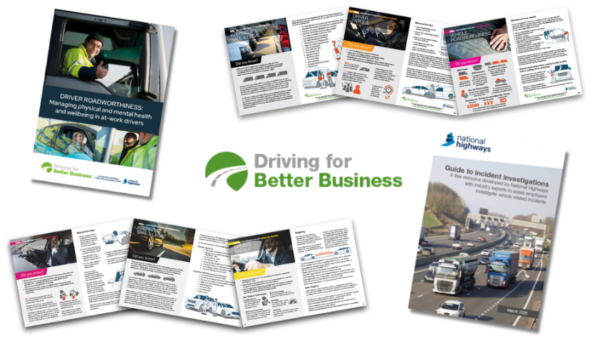
MC: I mentioned earlier that we’ve produced a comprehensive guide to incident investigation, available free through Driving for Better Business.
We worked with a number of organisations, including Mitie, to develop it, and the common theme across all of them was the transparency of their systems.
Nothing came as a surprise. People understood: “This has happened. This is what will happen next, then next.”
Having that openness and transparency puts organisations in a much stronger position – not only to carry out a fair and just investigation, but also to share the outcomes with drivers, managers and supervisors who have the authority to make meaningful changes.
Okay, lovely.
Thank you all very much for your attention.
Please come and speak to us – we’d be delighted to have a chat with you.
Finally, please put your hands together for our two excellent and very willing volunteers, Renee and Stefan.