Fitness to Drive
April 2026
Driver Managers – improve your understanding
Our monthly fleet focus delves deeper into some of the key road safety topics to improve your understanding, with free resources for you to share with your drivers.
Each month’s topic sits in a library so, as the library grows each month, you can access a bank of resources at any time to help you improve driver safety in your organisation.

Fitness to Drive & Medical Conditions
Driving is for the most people the most dangerous activity they can do.
We know that in the great majority of cases the initial cause of a crash is around driver behaviour with distraction, drug, alcohol and substance impairment, fatigue and medical conditions at the root of most crashes.
It’s vital therefore that as an organisation and as a manager or owner you are confident that your drivers are fit to drive.
So, how confident are you that your drivers aren’t carrying any medical conditions which could affect their driving? How confident are you that they aren’t dangerously fatigued or impaired?
From Compliance to Continuity: Addressing the Modern Fitness to Drive Mandate
The duty of care owed by a business to its drivers is undergoing a significant transformation. As evidenced by recent legal advisories, the traditional reliance on annual licence checks is no longer sufficient to shield an organisation from liability or ensure public safety. We are seeing a move toward a more ‘shared responsibility’ model that acknowledges the fluid nature of human health.
The core challenge lies in the invisible risk: the gradual or episodic health shifts — ranging from neurological conditions to temporary cognitive impairments — that standard checks fail to capture. To mitigate these threats, fleet managers must transition to a proactive framework that prioritises medical transparency and policy-driven oversight over simple documentation.
Our partners as Woodfines LLP and LMP Legal have both contributed highly informative articles around this important topic.

Fitness to drive and driver medical conditions
Ensuring fitness to drive is a far more complex challenge than simply meeting basic eyesight requirements; it involves a sophisticated mix of physical and cognitive skills that can be compromised by everything from temporary illnesses to long-term neurological conditions. With many of these health changes occurring gradually or sporadically, they often remain hidden until a serious incident occurs, placing both the driver and the organisation at significant legal risk. Adopting a proactive, legally sound approach, with one that moves beyond annual licence checks to focus on clear policies and shared responsibility, whereby it is essential for any fleet manager looking to protect their staff and their business.

Understanding the legal responsibility for fleets
For many fleet managers, a company’s staff is its most valuable asset, yet ensuring their safety on the road remains a constant and complex challenge. Fitness to drive encompasses far more than simple eyesight requirements; it involves a range of physical and cognitive skills that can be significantly impaired by everything from temporary illnesses like migraines to long-term neurological conditions. Where these conditions can be constant or develop gradually over time, they often go unnoticed until an incident occurs. Protecting both your drivers and your business requires a proactive, legally sound approach that moves beyond simple annual licence checks to address the shared responsibility of maintaining medical standards on the road.
Driver Resources – Fitness to Drive

What’s in the Resource Download
Download a zip file with additional resources to share with your drivers including:
- an article to share with your drivers on their Fitness to Drive
- short safety messages on Fitness to Drive and Medical Conditions to send to your drivers on their devices
- posters and digital screen images for your staff noticeboards and display screens
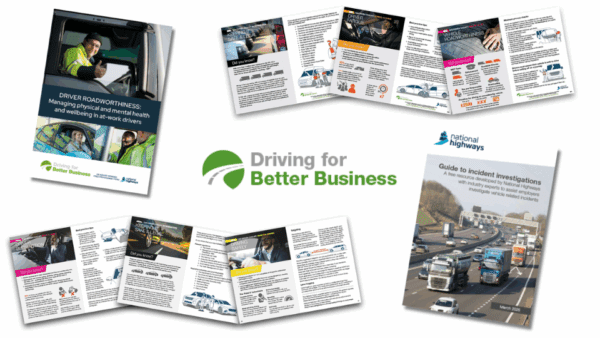
- information sheets from our Driver Toolkits
Resources include:
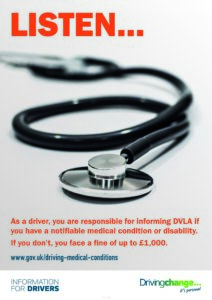
Driver Poster A3 – Listen

Driver Poster A3 – Bitter Pill to Swallow
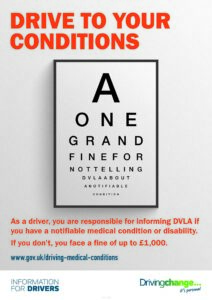
Driver Poster A3 – Conditions
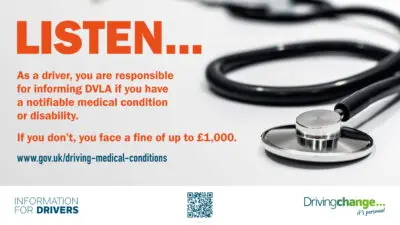
Driver Poster Landscape – Listen

Driver Poster Landscape – Bitter Pill

Driver Poster Landscape – Conditions