
Driving for Work: Mythbusters
52 common misconceptions – and the facts employers and drivers need to know
Myth 6: A valid MOT means the vehicle is safe to use
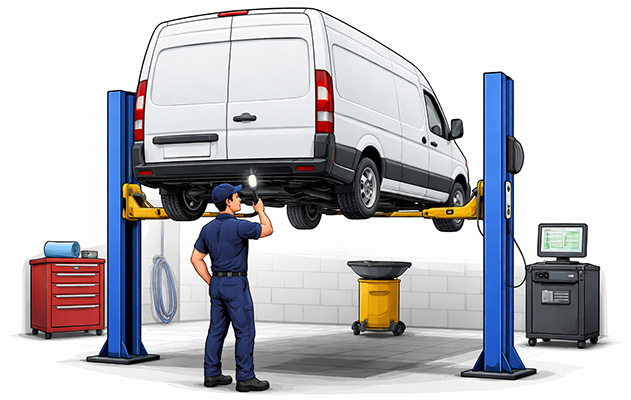
An MOT certificate confirms that a vehicle met the minimum legal roadworthiness standard on the day it was tested – nothing more. It does not mean the vehicle is safe to drive today.
The fact that huge numbers of both vans and cars fail their MOT test demonstrates that they were being driven in an unsafe state in the days (and possibly weeks or months) prior to the test. Tyres can deteriorate, brakes can fade, lights can fail, and fluid levels can drop between MOT dates.
Drivers should carry out pre-use vehicle checks to ensure their vehicles are safe. This should be at the start of every day or every shift for a commercial vehicle, or every week for a car and an additional visual check of tyres before any long journey.
Any defects should be reported and rectified as soon as possible, with safety critical faults such as worn tyres or broken brake lights requiring the vehicle to be removed from service and fixed before being used again.
Relying on an MOT certificate as evidence of ongoing roadworthiness is a dangerous misunderstanding.
Driver takeaway:
Carry out pre-use checks every day or every shift.
Do not rely on an MOT date as a measure of current roadworthiness.
If you spot a defect, report it before driving.
Manager takeaway:
Implement a structured defect reporting system and act on reports promptly.
Safety-critical faults must take the vehicle off the road.
An MOT certificate on file is not a defence if a driver reports a known fault that was ignored.