
Driving for Work: Mythbusters
52 common misconceptions – and the facts employers and drivers need to know
Myth 8: It’s important to get home, even when you’re tired
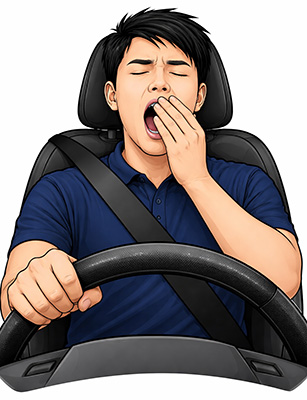
Up to one in five collisions are caused by tiredness and usually involve vehicles running off the road or into the back of another vehicle. They tend to be high-speed impact collisions with an increased likelihood of death or serious injury.
Driving while tired or unwell impairs judgment and slows reaction times, leading to delayed responses and late braking. Sleeping just four to five hours a night for a week impairs performance to the same extent as being over the alcohol limit.
Tired drivers can also have what are known as microsleeps, which last from a fraction of a second to two seconds. At 60mph a van travels 27m/sec, so microsleeping for two seconds means 54m of unconscious travel.
Many employers have a policy that authorises an overnight stay if the driver covers a certain number of miles or is on duty for a certain number of hours during the day.
These policies are there for a reason – drivers should take advantage of this and not carry on simply because they’d rather get home. They could be putting themselves and everyone around them at risk of being in a very serious collision.
Driver takeaway:
If you’re too tired to drive safely, stopping is not weakness – it is the right decision.
Use your employer’s overnight policy if one exists.
No destination is worth a fatal collision.
Manager takeaway:
Publish and actively promote a fatigue policy that authorises and encourages overnight stays when hours or mileage thresholds are reached.
Discuss fatigue with drivers who fail to take advantage of this, putting themselves and others at risk.