What Happens When You Start Measuring Driver Safety Properly?
Driver Safety Theatre: Session 2
28th April 2026, 11:30
Transcript
Morning everybody. Thank you for the session. Just want to make a quick introduction. The title of this session today is what can you actually do if you start measuring driver safety in commercial fleets. Basically, I think that premise is not a new one. People are used to measuring the way vehicles are driven historically with GPS and telematics. But with the advent of AI and AI cameras and some of the new technologies that are emerging, that conversation and distinction can be improved, and context can be delivered. That drives more accuracy and more buy-in from end users, which are the drivers of these vehicles.
I've got two domain experts with us today. We've got Steve Mulvaney, who I'm going to let introduce himself in a second, and Allison Moriarty. They're going to bring more of a customer perspective, more of a real-life experience, and share with us today exactly what they've been able to achieve.
Good morning. Thank you, Sergio. My name is Steve Mulvaney. I'm the fleet manager for the Canal and River Trust. We operate 517 vehicles across England and Wales. Predominantly it's a construction business but looking after our 200 year old assets, and I provide the means of transport to get our teams across to their sites.
Good morning everybody. I'm now in a consultancy role but have been operational most of my career looking after risk and compliance with some large fleets, mainly in the construction and civil engineering business. One thing I did in terms of risk was using data, which is the reason I'm here today. I normally would start sessions like this with the demos, but with this being health and safety they wouldn't allow it, so we'll have to forgo that for now.
To set the premise before we get into the discussion with Allison and Steve, if you are going to measure driver behaviour and take data out of vehicles and the driver experience, what are you going to look at? The data tells us these are the leading categories of distraction and driver behaviours that lead towards risk and accidents.
When we talk about traditional telematics and driver behaviour apps, it was almost always about speeding, harsh braking, and harsh acceleration. Those tended to drive the narrative around performance across a fleet. With AI technology in vehicles, you can start defining far more specific categories that align with actual risk and context. For example, if someone hits the brakes very hard to avoid an accident, they are actually doing what you want. They're exercising good judgment. Distracted driving tends to be the highest risk category today. Everybody gets distracted by their phones at some level. Following distance and following too close is another category people are trying to manage. That is more complex in cities like London or Birmingham where it is not easy to maintain distance without causing frustration.
Technology is starting to emerge that provides more context and capability, which helps drivers trust the system, recognise it understands complex environments better, and ultimately drives adoption and easier implementation.
I'm going to hand over to Steve. Steve was involved in the architecture and design of how the system was implemented. Typically, the technology is the easy part. The challenge is introducing it to the business and enforcing change in an environment where people are not used to having a camera in the vehicle.
Our challenge was coming out of a nationalised business into a charity just over 12 years ago. Heavily unionised. Everyone thought we were trying to spy on them. We already had basic track and trace telematics that gave us some speeding data, but I wanted more. I wanted to reduce road risk significantly, and AI camera technology was the way to do that.
We went to market, tendered, and partnered because I wanted best in class. But the challenge was getting it into the organisation and selling the idea of a camera in the cab looking at drivers. People said they did not want it. We brought trade unions in early, showed them data, and got buy-in. Our insurance company fully supported it. We tested it in about 10 percent of the fleet.
The system is superb because it gives you feedback when you do something wrong. If you are too close or speeding, it tells you. At first people resist it, but then they realise it is making them better drivers. We had a no-fault accident where camera footage proved the driver was not at fault, and that helped change attitudes across the organisation.
We got things wrong at first. We were too overzealous and reset the approach. We softened reporting and then saw results. In year two we saw significantly reduced road incidents, lower insurance premiums, better driving, and fewer driver interventions. We now talk to far fewer drivers each week about issues. I would prefer none, but the improvement is clear.
We are seeing better vehicle care, more honesty around incidents, and less disagreement with insurers because we have evidence. If you are entering this space, do it. There will be pain at the start, but it becomes second nature.
Looking at the data and implementation, one key decision was to keep it simple. The technology can do a lot, but they focused on specific areas first, which helped drive results.
Safer fleets are also more cost effective fleets. There is a human need to make drivers safer, but there are also financial benefits. Our customers have seen significant reductions in incidents when following similar approaches.
My worst nightmare is any colleague going to hospital due to an accident. This technology helps make drivers safer, and we also see reduced tyre costs and overall vehicle costs because vehicles are being treated better.
One important point is not to vilify drivers. You need to look at management, scheduling, and wider behaviour patterns. It is not always the individual driver. Equity is important. Everyone should be treated the same, including managers and company car drivers.
Newer technology can also recognise positive driving, not just negative behaviour. It can show when drivers are doing things well, which is important for fairness and engagement. Drivers can see video of events and receive coaching feedback. We are also exploring reward schemes for improvement.
The key is culture change. Communication is critical. Drivers care about getting home safely, not company savings. You have to frame it around safety and life skills, not just performance metrics.
We also saw improvements in targeted training. Data allows you to focus training where it is needed, rather than applying the same training to everyone.
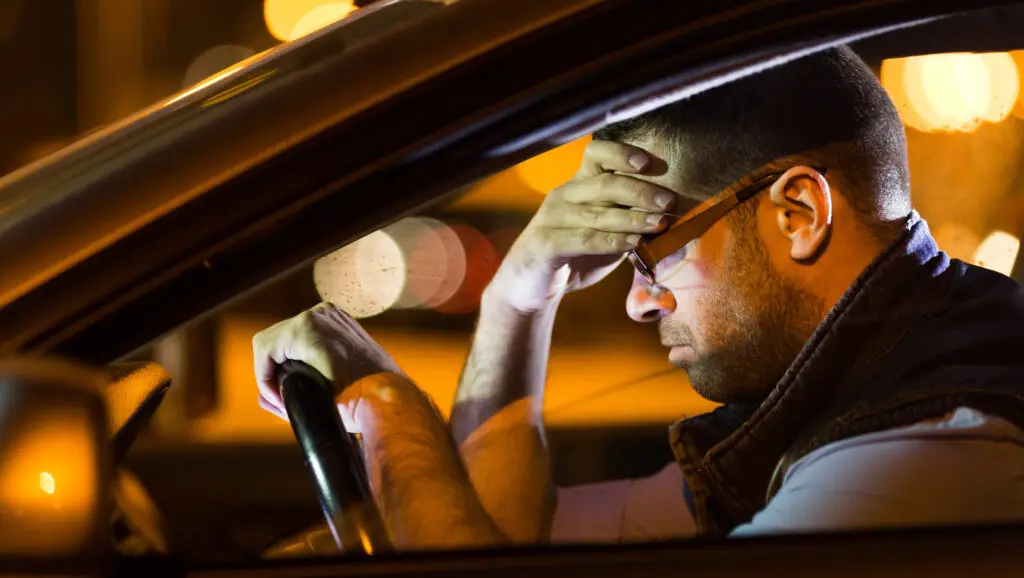
On distracted driving, the system detects phone use and lack of attention. Initially there were many events, but over time drivers improved and events reduced significantly. Smart watches are also becoming a distraction issue. Even eating while driving has been observed in camera footage, which shows how varied distraction can be.
We evaluated multiple providers. Many tick boxes, but we focused on camera quality and data integrity. We chose the system because it was best in market, reliable, and future proof as much as possible.
If you go down this route, you need the best system you can reasonably get. If the data integrity is poor, you lose trust and buy-in. It is better to invest properly at the start.
AI coaching and feedback helps drivers improve continuously. Over time, this changes fleet culture significantly.
Finally, communication and fairness remain key themes. The technology is most effective when it is used to support drivers, not punish them, and when it is applied consistently across the organisation.