Are your drivers mentally fit for purpose?

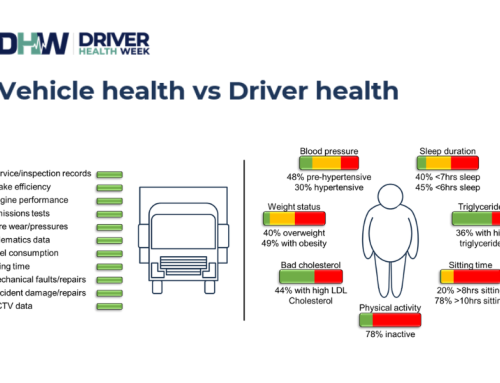
When we think about road safety, we tend to picture speed cameras, worn tyres, or poorly maintained vehicles. Modern fleets are safer than ever, equipped with ABS, lane assist, collision warnings, and a wide range of driver assistance systems. Yet none of this changes one stubborn fact: “nine out of ten crashes are caused by human factors.” Not the vehicle. Not the road. The person behind the wheel.
Road safety is fundamentally a people issue – and a health and wellbeing issue. For any employer with drivers on their books, that makes it a core responsibility.
The risks we already recognise
Speeding, phone use, and fatigue remain the most visible causes of collisions. But they are rarely simple acts of carelessness. A driver who speeds may be reacting to pressures built into the operating model: unrealistic delivery windows, extra stops added mid route, or targets set without regard for traffic or rest. The decision to speed can frequently start in the office, not the cab.
Phone use is another major distraction, and the cognitive impact is often underestimated. Hands free does not mean risk free; a phone call divides attention in ways that meaningfully increase danger.
Fatigue is perhaps the most serious and least visible risk. It is significantly underreported because drivers who admit fatigue face legal exposure. Research suggests it plays a role in far more crashes than official figures show, with effects on reaction time comparable to being over the drink drive limit.
What links these three? They are often management failures as much as driver failures.
Beyond the obvious risks lie the hidden ones. A driver who learns mid morning that two extra stops have been added to their afternoon run will spend hours calculating whether they can still finish on time. That mental load doesn’t disappear when they start the engine.
Unfamiliar vehicles add further pressure. Being moved into a larger vehicle, handed a rental, or given a new model without proper familiarisation creates anxiety that travels with the driver. Confidence in the vehicle matters, and proper handover training should be standard.
Workplace tension also follows drivers onto the road. Clinical psychology shows that interpersonal conflict is one of the most cognitively draining stressors humans experience. A difficult conversation with a line manager at the morning briefing does not stay at the depot gate.
Personal pressures compound this further: financial stress, undiagnosed health conditions, family difficulties, bereavement, and mental health challenges. Anxiety and depression are significantly more common in transport workforces than in the general population, driven by isolation, unsociable hours, and time away from home. These pressures do not pause when a shift begins.
What employers can do
Employers are far from powerless. The starting point is identification. Pre shift check-ins – genuine conversations rather than a tick box “are you fit to drive?” – create psychological safety for drivers to raise concerns. Train your managers to notice changes in behaviour, punctuality, mood, or near-miss rates. Most serious incidents have a backstory. The goal is to act earlier.
Data is another underused asset. Telematics, incident logs, near miss reports, and absence records can be overlaid to reveal patterns around routes, shift lengths, or individuals where pressure is building. This is actionable intelligence that many organisations overlook.
Mitigation means reviewing whether schedules are achievable, ensuring proper break time, never skipping vehicle familiarisation, and – critically – building a culture where a driver can say “I’m not fit to drive today” without fear of discipline or lost pay. That cultural shift may be the single most important safety intervention an organisation can make.
The question that matters
The real challenge for employers is this: “How do you actually know how your drivers are feeling before they set off today?” And what happens when a driver says they can’t drive? Is honesty safe, or does the system punish it? If those questions feel uncomfortable, that’s exactly the point.