
Driving for Work: Mythbusters
52 common misconceptions – and the facts employers and drivers need to know
Myth 12: Driving for work doesn’t affect your physical health
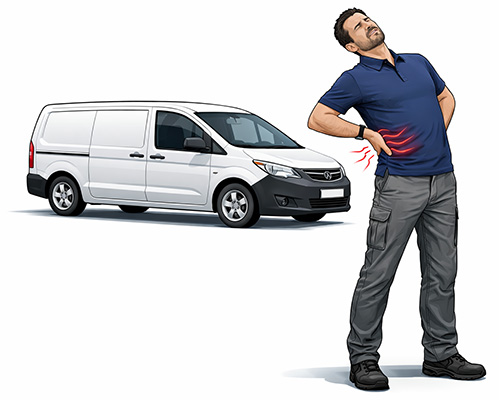
This is a myth with serious long-term consequences. Professional drivers spend long periods sitting behind the wheel without any posture change – a significant but often underestimated risk, as sustained sitting puts more pressure on the spine than standing. The discs become compressed and may lose flexibility, and poor seat positioning can cause strain on muscles, tendons, and ligaments, increasing the risk of ruptured discs.
Over time, this sedentary lifestyle is also linked to obesity, heart problems, high blood pressure, and diabetes. Research in the US showed that drivers averaging 12,000 miles per year raise their risk of obesity by 30%. The effects compound when drivers rely on convenience food during long shifts and skip physical activity due to fatigue.
Employers and drivers should treat physical health as a genuine occupational risk, not a personal lifestyle matter. Simple interventions such as adjusting seat position and lumbar support, building short walks into break schedules, planning healthier meal options, and building exercise into the working week can make a meaningful difference. Driving, especially for long periods, is a sedentary and often stressful activity: for every journey, try also planning ten minutes of activity.
Driver takeaway:
Take your physical health as seriously as your driving.
Adjust your seat properly, use breaks to walk, plan meals in advance, and build exercise into your week – even ten minutes per journey day makes a difference over time.
Manager takeaway:
Treat driver physical health as an occupational risk, not a personal lifestyle matter.
Build walking time into break schedules, provide guidance on nutrition and posture, and monitor for signs that workloads are leaving drivers no time or energy for healthy habits.